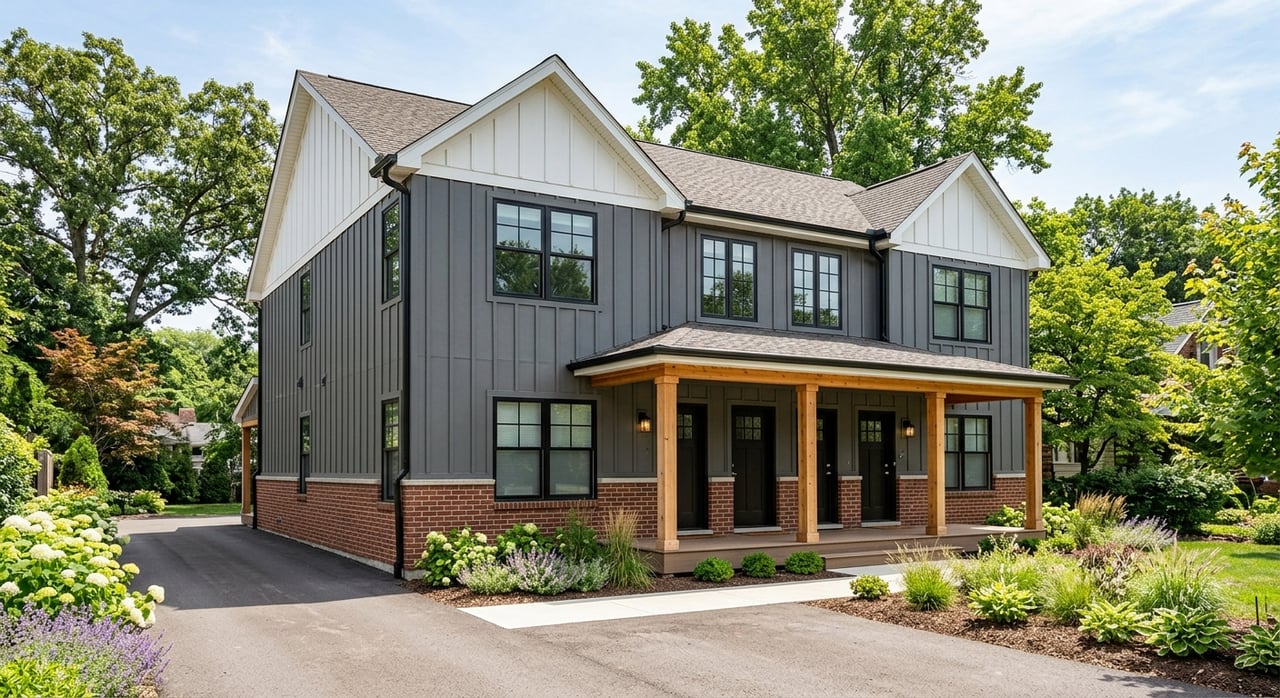
Chattanooga Small Multifamily Investment Buyer Guide
April 9, 2026
April 9, 2026
Looking for a property that can help you build equity and create rental income at the same time? In Chattanooga, small multifamily properties like duplexes, triplexes, and quadplexes can offer that mix of flexibility and long-term potential, but they also require careful analysis. If you are thinking about house hacking or buying a 2-4 unit investment, this guide will help you understand local pricing, rents, financing, and property due diligence so you can make a more confident decision. Let’s dive in.
Small multifamily is already an established part of Chattanooga’s housing mix. According to HUD’s Chattanooga housing market analysis, 16.4% of occupied rental units in 2023 were in 2-4 unit structures, which shows these properties remain a meaningful local asset class.
That matters if you want something between a single-family rental and a larger apartment building. A duplex, triplex, or quadplex can give you multiple income streams while still fitting into many residential areas and financing programs.
Chattanooga also has some strong demand anchors. HUD notes that education and health services is the area’s largest employment sector, and the University of Tennessee at Chattanooga enrolled about 10,900 students in spring 2025, which supports steady housing demand in parts of the market near UTC and downtown.
The first thing to know is that small multifamily pricing in Chattanooga has a broad range. Current listing snapshots cited in the research show duplexes and triplexes commonly listed from the mid-$200,000s to the upper-$500,000s, while quadplexes range from about $485,000 to nearly $900,000 depending on age, condition, finishes, and location.
That spread is not unusual. Infill construction, renovated interiors, larger unit sizes, and stronger central locations can push values up quickly, especially for turnkey properties that need less work.
At the same time, you should avoid assuming every deal will perform the same way. HUD described the overall rental market as slightly soft in early 2025, with a 9.0% rental vacancy rate and 7.5% apartment vacancy, so conservative underwriting is important in this market.
Rentability is about more than the number of units. The research shows active examples where a renovated quadplex at 32 S Germantown reported a monthly rent roll of $4,975, while another quadplex at 1113 McBrien advertised gross monthly rents of $3,100+ with rents listed at $695, $715, $850, and one vacant unit.
Those examples highlight an important point: layout, condition, and location often matter as much as door count. Listings frequently call out separate entrances, off-street parking, updated kitchens and baths, mini-splits, new roofs, and newer windows because those improvements can support leasing and reduce near-term maintenance.
Parking can also affect rentability more than some buyers expect. Near UTC, Apartments.com market context referenced in the research notes the campus area is car-dependent with limited transit, so easy access and practical parking remain relevant even in more central locations.
Citywide averages only tell part of the story. HUD found Downtown Chattanooga apartments averaged $1,466 with a 7.3% vacancy rate in the first quarter of 2025, while some outlying submarkets posted higher vacancies.
For you as a buyer, that means the better opportunity is not always the lowest list price. In many cases, the stronger play is a property with solid unit condition, practical parking, and access to major employment or campus areas where tenant demand may be steadier.
The research also points to local anchors and infill areas where small-scale multifamily already exists, including areas tied to downtown, UTC, North Shore, Brainerd, East Ridge, Hixson, and other infill neighborhoods. That does not mean every property in those areas performs the same, but it does reinforce the need to analyze each submarket carefully.
Here is a simple way to frame current pricing from the research:
| Property type | Approximate pricing band |
|---|---|
| Duplexes and triplexes | Mid-$200,000s to upper-$500,000s |
| Quadplexes | About $485,000 to nearly $900,000 |
This matters because many duplex deals can still feel similar to a residential purchase, especially for an owner-occupant. By contrast, quadplexes and newer infill properties can move into a more investment-focused price category quickly.
If a listing has added costs like an HOA fee, that needs to go into your analysis too. One active fourplex example in the research included a $100 monthly HOA fee, which is a reminder that even small recurring expenses can affect cash flow.
If you plan to live in one unit, your financing options may be broader than you think. The research shows that Fannie Mae HomeReady allows 2-4 unit principal residences, and FHA-insured mortgage programs can also be used for qualifying 2-4 unit properties that meet FHA standards.
For owner-occupied purchases, this can make a duplex, triplex, or quadplex more accessible than many buyers assume. Freddie Mac also publishes mortgage options for 2-4 unit owner-occupied primary residences, which reinforces that house hacking is a recognized financing path.
Investor purchases are usually underwritten more conservatively. According to Freddie Mac’s maximum LTV guidance, the maximum LTV for a 2-4 unit investment property is 75%, which often means a larger down payment, stronger reserve requirements, and tighter review of the property’s income.
One of the biggest questions in a small multifamily purchase is how much rent your lender will actually count. The research notes that Fannie Mae’s rental income guidance typically uses 75% of gross rent when lease agreements or market rents are considered, which helps account for vacancy and ongoing maintenance.
That means you should not build your budget around 100% of stated rent. If a unit is vacant, or if rents in the listing remarks seem optimistic, your lender may take a more conservative position than the seller does.
You may also need a small residential income property appraisal for a 2-4 unit home rather than a standard single-family appraisal. FHA appraisal guidance referenced in the research points to that difference, and it is one reason these purchases require more documentation upfront.
Because Chattanooga’s rental market was described by HUD as slightly soft, your numbers should be stress-tested. A good deal should still make sense when conditions are less than perfect.
As you review a property, focus on these basics:
The key question is simple: after a vacancy haircut, do the rents still support the debt and leave enough room for operating costs? If the answer is no, the deal may be too thin.
Before you write an offer, it helps to get very specific with financing. Ask questions like these:
These questions can help you compare loan options more accurately and avoid surprises later in the process.
In Chattanooga, zoning and permitting are not side issues. They are part of the investment case. The city offers a zoning verification service, and zoning rules govern density, location, and land use.
If you are considering a major rehab, conversion, or expansion, you should confirm what is allowed before you close. The city’s residential building permit process may apply, and prior work on the property should be checked for proper permitting where relevant.
The research also notes that Chattanooga’s landlord renovation resources recognize duplexes, triplexes, and quadplexes as eligible in some cases, but only for vacant units and only when projects meet Housing Quality Standards and Certificate of Occupancy requirements. That is useful context if you are evaluating value-add opportunities.
If you plan to rent units, fair housing compliance should be built into your management process from day one. Chattanooga’s fair housing program mirrors Title VIII of the Civil Rights Act of 1968 and applies to owners, managers, brokers, lenders, and advertising.
The city lists seven protected classes: race, color, religion, national origin, sex, disability, and familial status. For you as an owner, that means screening standards, lease language, advertising, renewals, and denials should all be handled consistently and documented clearly.
A strong inspection period is especially important with small multifamily. You are not just buying square footage. You are buying future maintenance obligations, tenant experience, and cash flow stability.
Ask your inspector and property manager about:
The best Chattanooga small multifamily deals usually combine decent location fundamentals with manageable repair risk. A cheap property with major deferred maintenance can become expensive very quickly.
If you are starting your search, keep your criteria practical. Focus on properties where the unit mix, condition, and submarket make sense together.
You may want to prioritize:
That does not mean every older property is a pass. It means you want a property where the path to stable occupancy is realistic and the numbers hold up under conservative assumptions.
Small multifamily properties in Chattanooga can be a smart way to house hack, diversify income, or grow a long-term portfolio. But the best results usually come from disciplined underwriting, a close look at submarket demand, and careful review of zoning, permits, condition, and financing.
If you want experienced guidance as you evaluate duplexes, triplexes, or quadplexes in Chattanooga and Hamilton County, connect with Jane Armstrong. You will get a steady, informed approach built around local market knowledge, strong process management, and clear next steps.
Stay up to date on the latest real estate trends.
Your real estate journey deserves a partner who listens, understands, and delivers. Jane Armstrong combines experience, local insight, and a personal touch to help you achieve your goals, no matter where you are in the process.