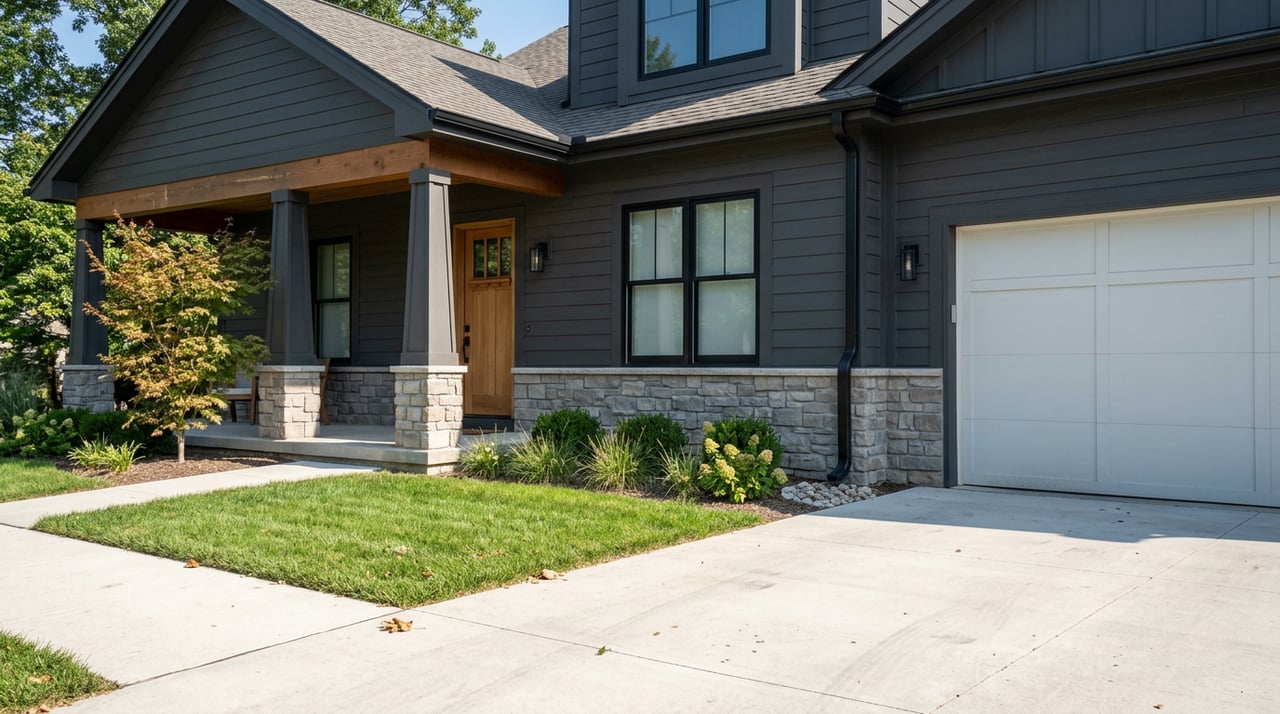
Choosing Between New And Resale Homes In Ooltewah
March 5, 2026
March 5, 2026
Thinking about buying in Ooltewah but torn between a brand‑new build and a move‑in‑ready resale? You are not alone. Your choice affects price, timing, customization, and long‑term maintenance, so it pays to compare side by side before you shop. In this guide, you will learn how new and resale homes differ in Ooltewah, what to expect for budget and timelines, and the questions to ask so your decision feels confident and clear. Let’s dive in.
Home values in Ooltewah vary by the boundary you use and the data source. Recent medians reported by major aggregators range from the high $300Ks to the high $400Ks. For example, area metrics show roughly low–mid $300Ks up to the low $500Ks depending on neighborhood and product. Different services quote different numbers because some track the 37363 ZIP while others use the city boundary or recent sales only. When you compare prices, note which boundary you are using so you are evaluating apples to apples.
Inventory and pace vary by source as well. ZIP‑level snapshots have shown several hundred active listings with a days‑on‑market measure that can look different from a days‑to‑pending figure. Those differences come from timing and what each site measures. The takeaway for you is to focus on your target neighborhoods and current MLS comps when you are ready to write an offer.
New homes in Ooltewah commonly start in the low to mid $300Ks and run into the $500Ks to $600Ks for larger plans, upgraded finishes, or premium lots. A recent median for new communities near Ooltewah sits around the mid $400Ks, which is a helpful anchor. Well‑known communities include Bainbridge Park by Pratt Home Builders and Harbor Crest by D.R. Horton. Recent MLS examples in Bainbridge have shown many finished homes clustering roughly in the $440K to $540K range, with prices moving based on lot, plan, and features. Expect lot premiums and design selections to add several thousand to tens of thousands to a base price.
If you need to move soon, look at spec or quick move‑in homes. When a new home is complete, you can often close in a timeframe that looks a lot like resale, typically 30 to 60 days after contract, subject to your lender and title timeline. If you choose a made‑to‑order plan on a specific lot, plan on roughly 6 to 12 months from contract to completion in many Southern markets. Production build times are commonly shorter than custom builds, which can take longer. Always confirm a builder’s current schedule and permitting status. For a deeper primer on build timing and how it differs from resale, see this overview of new‑construction timelines and tradeoffs from a regional builder resource at Jagoe Homes.
Signing early in the construction process usually gives you more control over finishes and some layout choices. That flexibility is a big advantage of new construction. Keep in mind that change orders during the build can increase costs and may add time. If timing is tight, consider a spec home and save customization for after closing with planned upgrades.
Most production builders offer a tiered “1–2–10” warranty structure: about 1 year for workmanship and materials, 2 years for major systems like electrical, plumbing, and HVAC, and up to 10 years for covered structural defects. Ask who administers the warranty and request the full document before you sign. For more context on standard builder warranties, review this summary from 2‑10 Home Buyers Warranty.
Energy use is another advantage of new builds. Many new homes are constructed to modern energy codes and some align with HERS or ENERGY STAR performance that can reduce utility costs compared with older homes. For perspective on recent HERS adoption trends, see the National Association of Home Builders discussion on energy ratings here. Always verify the specific rating, insulation details, and equipment specs for the home you are buying.
Many new Ooltewah subdivisions include HOAs that maintain common areas and amenities. Recent MLS summaries for Bainbridge Park have shown HOA dues near $1,000 per year, though fees vary by community and amenities. If the neighborhood is early in its build‑out, the HOA may still be developer‑run, and rules can feel stricter during this phase. Ask for the CC&Rs, bylaws, budget, and reserve information and confirm what your dues actually cover.
If timing is your top priority, resale typically wins. Once you are under contract, financed resales commonly close in about 30 to 45 days, assuming normal lender and title processing. Cash purchases can be faster. For a plain‑English look at closing timelines, this guide from SmartAsset offers a helpful overview.
Resale homes often sit in established areas with mature landscaping and completed streets. You may find extras that can be costly to recreate in a new build, such as finished basement spaces, custom built‑ins, or significant hardscaping. Many resales also come with window treatments, appliances, and yard improvements that reduce immediate out‑of‑pocket costs after closing.
With older homes, plan for more near‑term maintenance risk. A common budgeting rule of thumb is to reserve about 1 percent of a home’s value per year for maintenance, with older properties often requiring more. Read a consumer‑friendly overview of typical upkeep costs at Reviews.com. Items that frequently appear after inspections include roof life, HVAC age, water heaters, and drainage or grading issues. You can often negotiate repairs or credits to address findings, so a thorough inspection strategy matters.
Resale purchases generally use standard mortgages such as conventional, FHA, VA, or USDA loans. New construction can be financed in two common ways: buy a spec or quick move‑in home and finance it like a resale at closing, or use a construction‑to‑permanent loan that funds the build and then converts to a regular mortgage. Ask your lender whether they offer a one‑time‑close construction program and how draws and rate locks work. To understand what a one‑time‑close loan entails, review this primer on VA one‑time‑close construction loans. Availability varies by lender.
Builders often offer incentives like temporary rate buydowns, closing cost help, appliance packages, or extended rate locks. Incentives shift with market conditions. Ask the on‑site sales team what is available today and whether using a preferred lender is required. For a broad overview of common builder incentive approaches, see this comparison guide at Jagoe Homes.
Hamilton County’s effective property tax rate has been reported near 0.35 percent in recent datasets. Use that figure as a starting point for planning, then verify the exact millage and any local levies with the county when you have a specific address. For county‑level context, review ATTOM’s property‑tax snapshot for Hamilton County here. HOA dues vary by community, and insurance is property specific. Build your monthly estimate using conservative assumptions and refine once you select a home and lender.
Before you buy, check FEMA’s Flood Map Service Center for the property address. Flood‑zone placement can affect insurance requirements and premiums, and some parcels near waterways are higher risk. You can learn how FEMA’s map service works by reviewing the MSC FAQ. Your agent can also pull a FIRMette and coordinate any needed follow‑up with local officials.
Many buyers work or play in Chattanooga. Ooltewah sits about 17 to 20 miles from downtown, which is generally a 20 to 30 minute drive depending on traffic and the specific neighborhood. For a simple distance estimate between Ooltewah and Chattanooga, see this route comparison. If schools are a priority, review Hamilton County Schools resources to understand zoning and programs, then verify assignments by address.
Use this simple framework to decide where to focus first:
Below is an illustrative estimate for a $475,000 Ooltewah purchase. Adjust to your exact address, program, and lender quotes.
This is a planning tool, not a quote. Your lender and insurer will personalize your numbers.
Ready to compare properties side by side or map out a build timeline that fits your move? Tap into 28 years of local expertise and a steady, data‑driven process. Reach out to Jane Armstrong for a thoughtful game plan that matches your budget, timing, and lifestyle.
Stay up to date on the latest real estate trends.
Your real estate journey deserves a partner who listens, understands, and delivers. Jane Armstrong combines experience, local insight, and a personal touch to help you achieve your goals, no matter where you are in the process.